
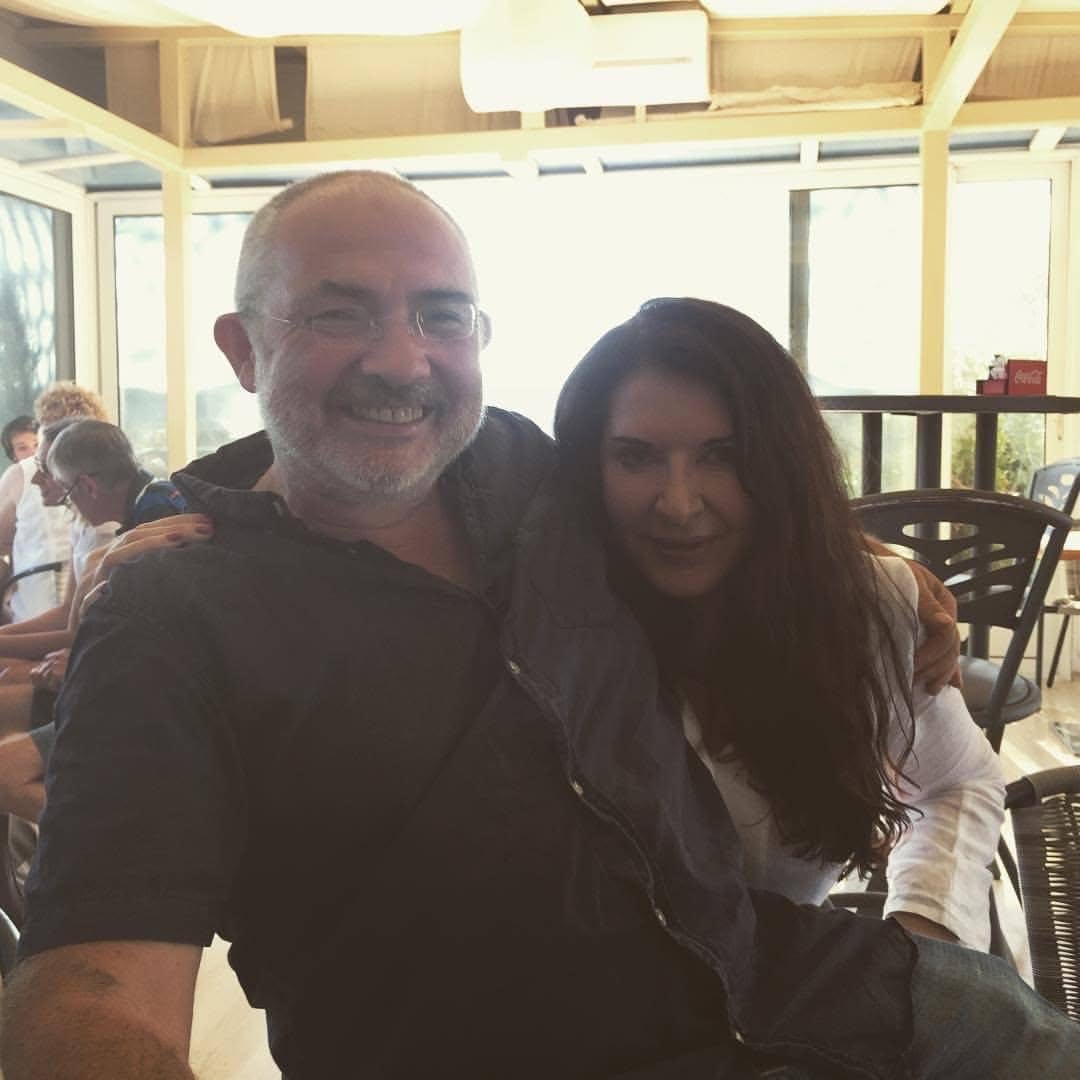
I will tell two stories about how chance acts as a producer of an artist's success.The first is about how Marina Abramović won the Golden Lion at the Venice Biennale.The second is about how Cecilia Vicuña, the icon of the 2022 Biennale, became an artist.
The First Story:The young country of Montenegro. Petar Ćuković, my partner—who was then the director of the National Museum in Cetinje and the curator of the Montenegrin pavilion—proposed Marina Abramović's project Balkan Baroque. It was incredibly beautiful and dramatic: Marina sits on a pile of animal bones that she washes while singing, flanked by videos of her parents delivering monologues about the bombings.
Petar left for Venice for the meeting of national pavilion commissioners. Meanwhile, back in Montenegro, other artists raised their voices—artists who considered themselves "no less deserving." Their arguments were:
Petar returned home to find that he was no longer the commissioner of the pavilion, Marina was no longer representing the country, and Montenegro was sending a group exhibition of "honored members of the artists' union."
As a result, because the project was so striking, she was invited to the Italian pavilion right in the center of the Giardini. Since that space was five times larger than the Montenegrin pavilion, the pile of bones turned into a literal mountain, the acoustics were vastly superior, and her work became truly majestic, ultimately winning the Golden Lion.
Naturally, this was a brutal lesson for the Montenegrin bureaucracy. The prime minister, who had succumbed to the chorus of provincial, envious critics and canceled her participation, never interfered again. However, relations with the world's most famous Montenegrin woman were ruined. When Marina later came to our residency at our invitation, her strict condition was that she see absolutely no one from the leadership.
Yet, in a certain sense, those provincial artists are the ones who secured her Golden Lion.
The Second Story:The second story is also connected to Venice. In 2022, the Biennale advertised itself using a fragment of Cecilia Vicuña's work—both on the catalog cover and on city billboards.
In 1992, I visited New York for the first time. Along with Viktor Misiano and Konstantin Akinsha, we were exploring America’s art scene as part of an exchange program: a gallerist, an art critic, and an art historian. I had already been a gallerist for two years, and I had my own agenda in New York. I became friends with Ronald Feldman (known worldwide as the gallerist who exhibited Joseph Beuys with his I Like America and America Likes Me performance, Andy Warhol, Ilya Kabakov, Komar & Melamid, etc.). Ron gave me playful pieces of advice that weren't actually playful at all. For example: "If you see something that doesn't fit your concept of art, it's probably very good art." We even agreed that I would find an artist for his gallery and curate the exhibition.
So, I was studying New York's art scene and became interested in the micro-installations of Cecilia Vicuña. They looked like absolutely nothing else. I asked the organizers of my trip to introduce us. I went to her studio with a translator and heard her story.
She is Chilean, and back home she had been a medicine woman—meaning she healed people with incantations, herbs, and the like. During Pinochet's regime, there was a campaign against witches, and she fled to America. In America, as you can imagine, medicine women were not in demand, so she entered a program designed to help refugees find a new profession. They took her to meet various professionals who talked about themselves and how they earned a living—mostly doctors. But one doctor canceled a meeting at the last minute, and a State Department employee urgently replaced him with an artist "working with transcendent energies." There were such artists back then; they practiced yoga and called themselves New Age. This artist made huge, monochrome abstract paintings. Cecilia asked him to explain what he was doing, and he said: "I create these screens; they concentrate Divine energy and direct it at the viewer, and the person becomes enlightened."
Cecilia responded: "I do something very similar. I join different objects into magical combinations, recite incantations over them, and they heal. Since that's the case, I will be an artist." And she went to art school. I promoted her to my American partners, and for some, she became a real revelation.
For thirty years, she exhibited her sorcerous installations and graphics, and in 2022, she reached the absolute peak of her art career. But if that unknown doctor had received her back then, everything might have gone who knows how.



