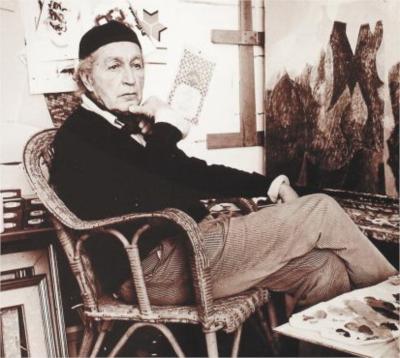
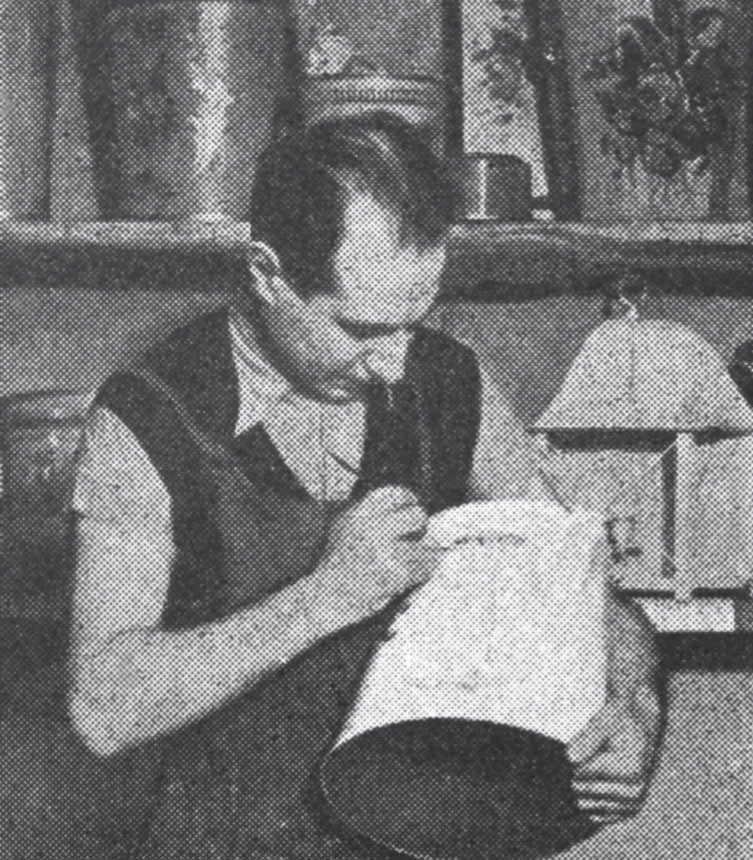
Isaak Bilenky was a distinguished painter and graphic artist, whose work seamlessly blended classical academic training with the vibrant social realism of the early Soviet era. His artistic education began at the Kiev Art School under the mentorship of Alexander Murashko and Ivan Seleznev, graduating in 1912. He further refined his craft at the prestigious Petrograd VKHUTEMAS, studying under the renowned masters Dmitry Kardovsky and Ivan Tvorozhnikov.
Throughout the 1920s and 30s, Bilenky was a prominent figure in the professional art circles of Petrograd and Moscow. He participated in major exhibitions, including the landmark "Artists of the RSFSR over 15 Years" (1932–1933) at the State Russian Museum. His portraits of cultural icons, such as the composer Alexander Glazunov and the poet Ilya Selvinsky, earned him high critical regard, showcasing his ability to capture both the character and the intellect of his subjects.


Bilenky’s versatility extended to book illustration and ethnographic lithography. In the 1930s, he illustrated classic literature, including Mark Twain's "Tom Sawyer." During his travels to Crimea, he created a celebrated series of autolithographs documenting the lives of collective farmers, which were later compiled into the historic 1936 album, "Shock Workers of the M. I. Kalinin Crimean Collective Farm."
Despite his success in the cultural capitals, Bilenky remained deeply connected to his roots. Since 1980, a significant collection of 24 of his works—primarily evocative landscapes of Soroca—has been preserved at the Museum of History and Ethnography in Soroca, Moldova. Today, his legacy continues to be celebrated through regional retrospectives, highlighting his enduring contribution to the visual heritage of both Moldova and the broader modernist landscape.




















.jpeg)