In 1914, he returned to his parents and enrolled in the ballet school at the Odessa Opera Theater, after which he was accepted into the theater's dance troupe. After the end of World War I in 1919, Kaushansky returned to Mandatory Palestine and devoted himself entirely to dance. He initially organized the "Jewish Art Ballet" ballet troupe, then switched to modern choreography, creating a group called "Hevre Trask." He staged several dance performances using classical music and traditional Hasidic dance, with costumes designed by himself. Gradually, he began to incorporate Eastern motifs (for example, in the dance "Yemenite Ecstasy") and religious motifs (for example, in the dance "Seeing Off the Queen of the Sabbath") into his programs. Agadati himself served as both choreographer and soloist for the troupe.Agadati understood his dance as a monologue, a "plastic midrash." "When a Jew dances, he wants to explain." "This is my goal," he said. Agadati gravitated toward minimalism—a static body, but dynamic legs, arms, and head. However, his sculpting revealed a typically Jewish penchant for abstraction, which he drew from painting and music. Agadati also created costume sketches for his productions; they were executed in a constructivist style, in a sharp, angular manner, using contrasting colors and various geometric shapes. Agadati's originality was also evident in his approach to the creative process of choreography; for example, he had a habit of first playing a musical excerpt and then performing the piece without musical accompaniment, in complete silence.In the early 1920s, drawing inspiration from Moldovan folk dances, Agadati created his own dance to the music of composer Alexander Boskovich and the words of Ze'ev Khavatselet. Unlike the Bessarabian Hora, this dance, known as the "Agadati Hora," used a fast, four-quarter rhythm. Similarities with the Bessarabian version remained in the circular choreography. The "Agadati Hora" gained extraordinary popularity, becoming the first Israeli national dance and remaining widespread to this day.


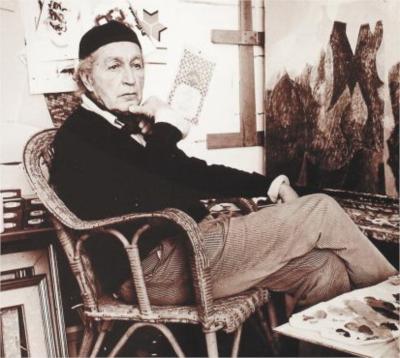
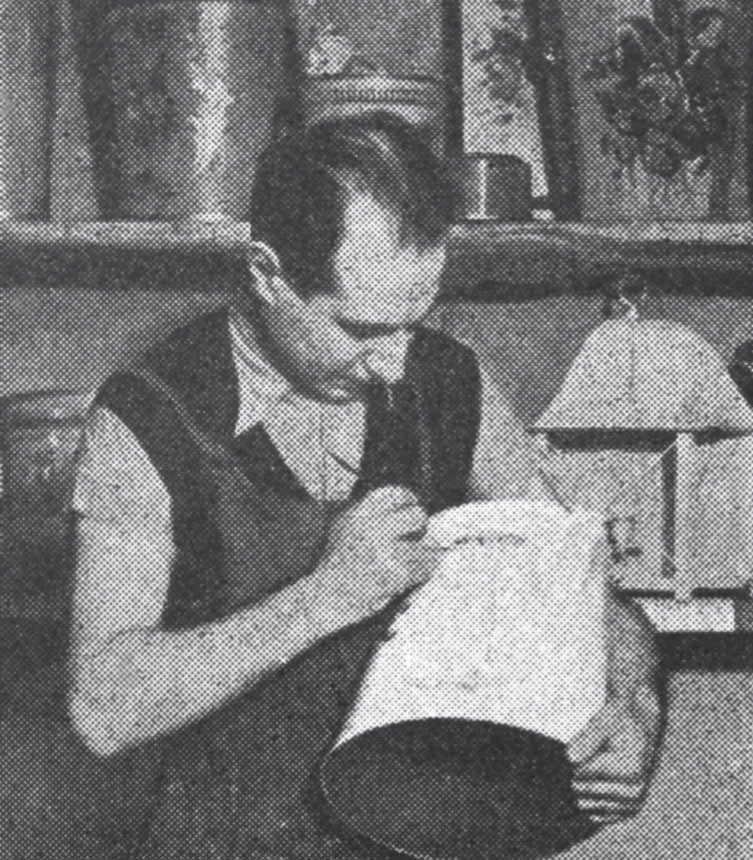
From 1923 to 1927, Agadati and his troupe lived in Europe, touring Warsaw, Berlin, Vienna, and Paris. In Paris, he befriended Moisei Kisling, Chana Orlova, Mane-Katz, Natalia Goncharova, Mikhail Larionov, and others. A portrait of Agadati by Kisling and costume sketches for Agadati by Goncharova and Larionov have survived.Upon returning to Tel Aviv, Agadati spent several years staging the annual "Adloyada" carnival processions for the holiday of Purim in Tel Aviv, which eventually became a tradition.However, during this period, he became drawn to cinema. As early as 1928, he starred in the Palestinian-German co-production "Spring in Palestine," which combined fiction and documentary footage.In 1931, he and his brother, Yitzhak Kaushansky (later also Agadati), founded the Aga-film company, which produced documentary footage of the rebirth of Israel until 1934.In 1935, the feature-length film "Here It Is, This Land," co-directed by Baruch, was released. The film attempted to depict both the complex process of adapting to a new environment through malaria, despair, ideological disputes, overcoming a harsh climate, swamps, and desert—and the triumph of the human spirit. Filming was conducted with consideration of contemporary technical advances in world cinema: the ideas of Mayakovsky (Agadati was long influenced by him as a futurist, in dance, cinema, and fine art), Sergei Eisenstein (film editing), and Eduard Tisse (camera techniques).His interest in cinema, however, continued even after the establishment of the State of Israel, and in 1950, Agadati opened the country's first film company, Geva, in Tel Aviv. Agadati often served as producer, director, screenwriter, cinematographer, and production designer on his own films.In the last period of his life he devoted himself entirely to painting, he painted in his own style: watercolor on silk.




















.jpeg)