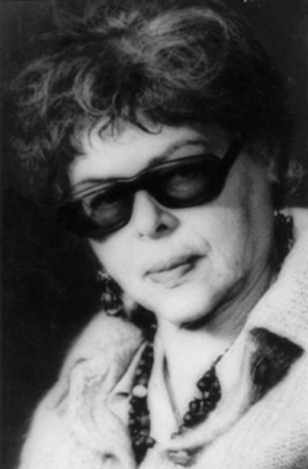
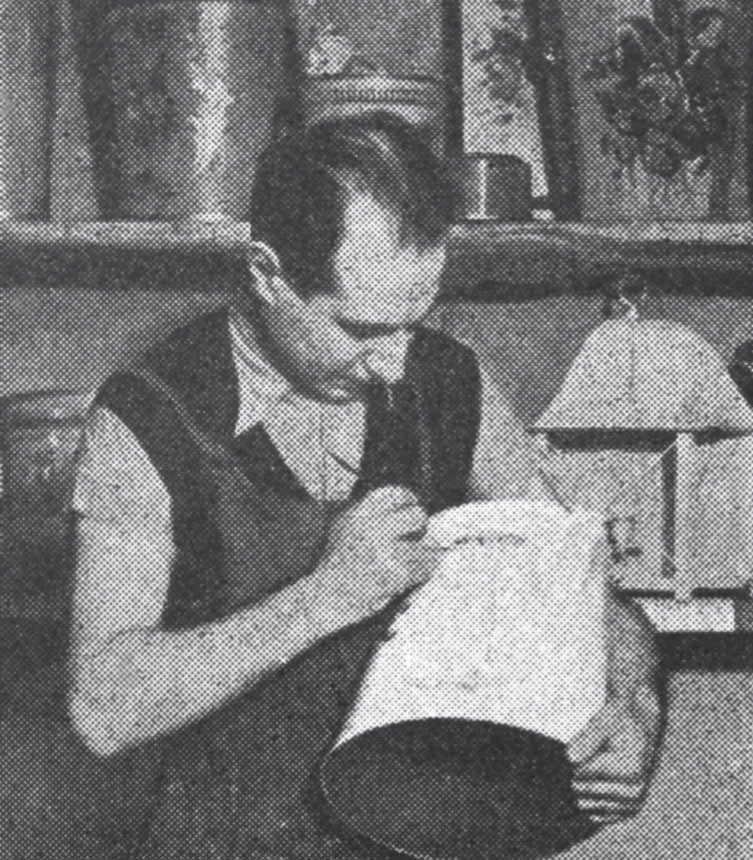
Abraham Melnikoff was born in 1892 in Sokyriany, Bessarabia, and died in 1960 in Haifa, Israel. He was a sculptor and painter.
In 1909 he moved to Vienna, where, at his parents’ request, he studied medicine, while spending his evenings at the Vienna Academy of Fine Arts.
The Vienna Academy of Fine Arts (Akademie der bildenden Künste Wien) was founded in 1688 as a private academy modeled on the Accademia di San Luca in Rome and the Paris Academy of Painting and Sculpture. In 1872 Emperor Franz Joseph I approved a new statute that made the academy the supreme state authority in matters of art, and in 1877 its current building on Schillerplatz was inaugurated.
At the beginning of the 20th century the Vienna Academy was an influential center of European art, but it was also marked by tensions between academic traditionalism and new movements. It was in Vienna at this time that the style known as Jugendstil, Art Nouveau, or the Vienna Secession emerged.
When Melnikoff decided to devote his life to art, his parents withdrew their financial support, and he moved to live with his brother in Chicago, USA, enrolling at the School of the Art Institute of Chicago.
The Art Institute of Chicago is one of the oldest art museums in the United States and holds one of the country’s most extensive collections. A distinctive feature of the institution is that it combines both a museum and an educational establishment (today’s School of the Art Institute of Chicago, SAIC). Both originated as the Chicago Academy of Design in 1866 and were renamed the Art Institute of Chicago in 1882.
In 1913 the museum shocked the city by hosting the Armory Show, a large-scale exhibition of modern art organized by the Association of American Painters and Sculptors and shown in New York, Boston, and Chicago. The exceptional acquisitions made from this exhibition laid the foundation for the museum’s collection of modern art.
It is very likely that Melnikoff saw the 1913 Armory Show, since his work strongly reflects the traditions of the Chicago school and American modernism more broadly, with powerful geometric forms characteristic of the Art Deco era.
In 1919 he repatriated to Eretz-Israel and began serving in the Jewish Legion. When the fighting in the Middle East ended, after a brief period in a British army camp in Egypt, Melnikoff arrived in Palestine.
In the 1920s and 1930s he worked in the Land of Israel and became one of the leaders of a community of young Jewish artists who rebelled against the Bezalel School of Arts and Crafts.


He created a number of sculptures reflecting the events of his time. His most famous work is the Roaring Lion in Kfar Giladi, a monument to those who fell in the battle of Tel Hai. The monument was unveiled in a formal ceremony on 22 February 1934, and on it are carved the last words of Joseph Trumpeldor: “It is good to die for one’s country.”
In 1934 Melnikoff moved to England and settled in London, having been invited by the British Zionist lawyer and leader Harry Sacher to create portrait busts of his family. Melnikoff spent the next twenty‑five years in London, producing portraits of many prominent figures, including Arturo Toscanini, Winston Churchill, Sarah Churchill, Ernest Bevin, and Mordechai Eliash. In 1937 Ben Uri commissioned him to make a bust of its chairman, Adolf Michelson.
The years of the Second World War were difficult: Melnikoff’s London studio was badly damaged by German bombing, as were many of his completed works. During this period he also wrote poetry and prose in English. His works were exhibited at the Fine Art Society in London in 1936 and at the University of Haifa in Israel in 1982.
Melnikoff was elected to the first committee of the Association of Painters and Sculptors in Israel, together with Yosef Zaritsky and Reuven Rubin.
The Association of Painters and Sculptors in Israel is a historic organization founded in the 1920s, before the establishment of the state, to foster art within the Jewish community. It organized exhibitions such as “The Eight” and “The Seven,” which presented works by many well‑known Israeli artists, and supported the formation of groups like “New Horizons.” The Association helped shape the artistic community, including through initiatives such as the Artists’ House in Haifa (now the Shagal Artists’ House).
In 1959 Melnikoff returned to Israel, and a year later he died in Haifa.




















.jpeg)