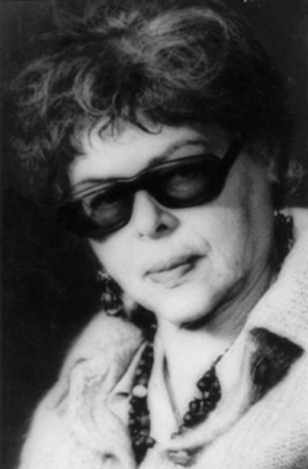
He was born on April 28, 1929, in the town of Radauti in southern Bukovina, Romania. In 1941, his family was deported to a Romanian concentration camp in Transnistria.While imprisoned, 13-year-old Avigdor constantly drew scenes from camp life. In 1943, representatives of the Red Cross visited the camp for an inspection. They noticed Ariha's drawings and arranged for him and his sister to join a group of Jewish children scheduled for deportation to Palestine. Their mother learned only after the war that they had survived and returned to their historical homeland.From 1946 to 1949, he attended the Bezalel Academy of Art, where he studied under Mordechai Ardon.In 1949, he received a scholarship to study at the École des Beaux-Arts in Paris, where he studied fresco painting. From 1954 onward, Arikha lived permanently in Paris, frequently visiting Israel.In the late 1950s, he adopted an abstract style.Abstract ImpressionismIn 1965, Arikha experienced a creative crisis – he abandoned painting and devoted himself exclusively to graphic art. For eight years, he did not touch a brush, instead making sketches from life. He returned to painting in 1973, combining figurative art with minimalist elements of abstract art, similar to Mondrian, in his portraits, nudes, and still lifes.MinimalismHe illustrated books by Hemingway and Bialik, and designed several books by Beckett, with whom he remained friends until the writer's death.


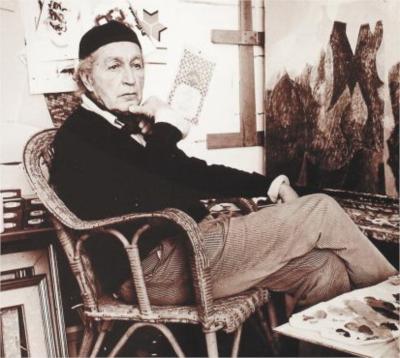
A major milestone in David’s career was the founding of the Ein-Hod artists' village in 1950, where he became one of its leading figures. His international standing was solidified in 1964 when he was invited to participate in the third Documenta in Kassel. He was showcased alongside icons like Joseph Beuys and Yves Klein, recognized for his innovative ability to bridge the gap between contemporary art and functional design.
Jean David’s legacy is defined by a vibrant, decorative style that masterfully combined illustration, caricature, and national motifs. As a muralist and a prolific poster designer, he shaped the visual identity of a young nation, creating iconic works for Maskit and numerous public buildings. His art remains a unique synthesis of magical realism and musical expressionism, reflecting a life of constant creative migration.




















.jpeg)