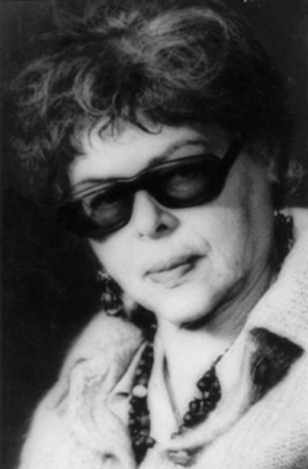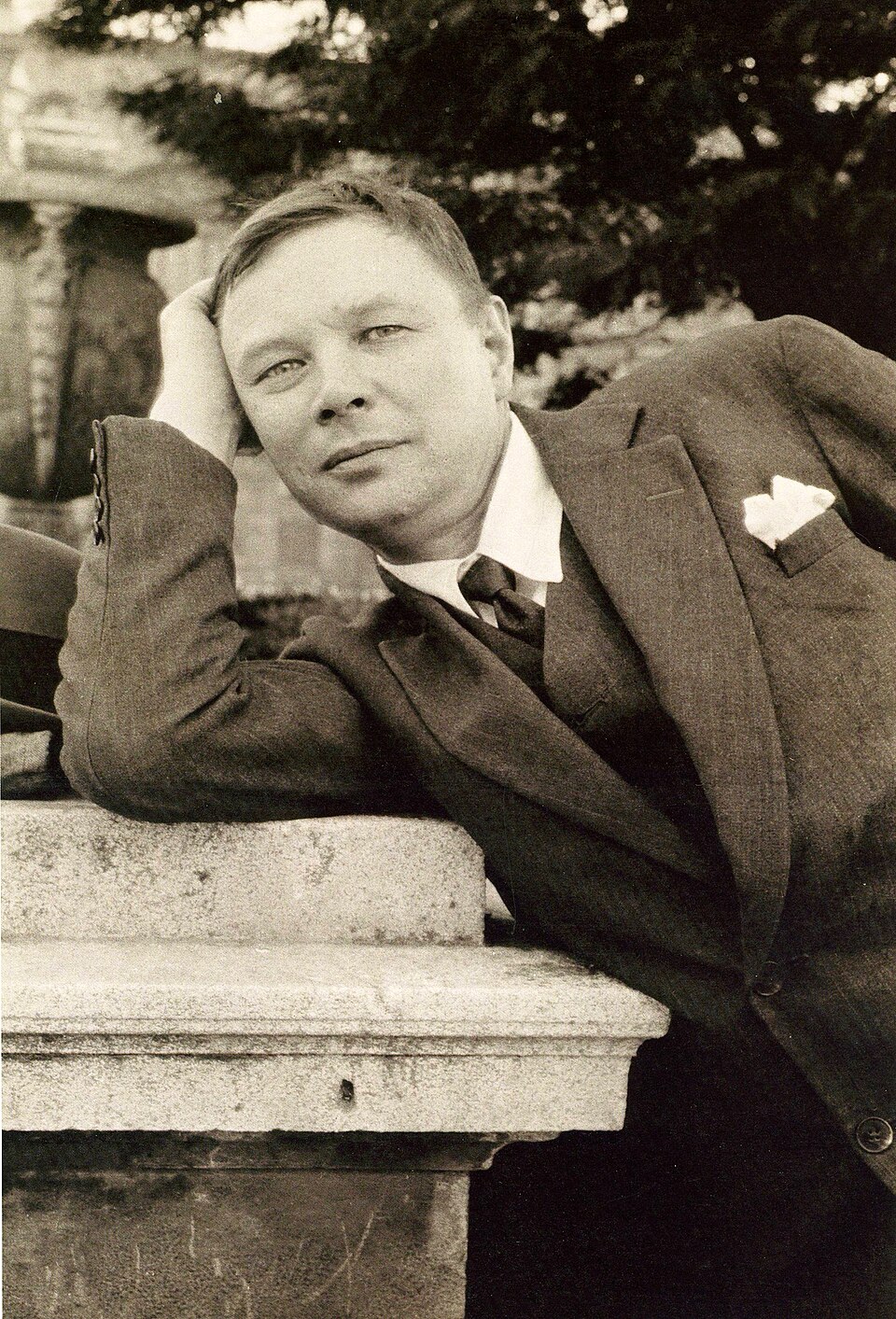
Mikhail Larionov was an outstanding artist of the Russian and European avant-garde, an art theorist, a scenographer, and one of the primary reformers of artistic language in the early 20th century. He was born in 1881 in Tiraspol—a city historically linked to the cultural space of Bessarabia and modern-day Moldova. The artist's origins and childhood impressions spent in the south of the Russian Empire played a vital role in shaping his artistic worldview.
The southern environment, with its multi-ethnic culture, bright light, folk traditions, street art, and craft aesthetics, was subsequently reflected in his painting. From an early age, Larionov was drawn to primitivism, folklore, folk signage, iconography, and peasant art—elements that would later become the foundation of his innovative style.
In 1898, Larionov entered the Moscow School of Painting, Sculpture, and Architecture, where he studied under Isaac Levitan and Valentin Serov. During this period, he met Natalia Goncharova—an artist, collaborator, and one of the most important figures of the Russian avant-garde. Their creative union became one of the central phenomena of the artistic life of the era.
Already in the early 1900s, Larionov actively participated in exhibitions of new art and quickly became a leader of the avant-garde movement. He spoke out against academic norms and sought to create art based on freedom of form and national artistic tradition. The artist was the organizer and participant of the associations "Jack of Diamonds," "Donkey's Tail," and "Target," which determined the development of Russian modernism.
A special place in Larionov's work is occupied by Neo-primitivism—a direction in which elements of folk culture, lubok, icons, and modern European art were combined. His works were distinguished by a bold color palette, decorativeness, and a deliberate rejection of academic "correctness." The artist was one of the first to consider urban signage, soldier art, and folk drawing as a full-fledged source of modern artistic language.


In 1912, Mikhail Larionov created his own artistic direction—Rayonism (Luchizm). This movement became one of the first forms of abstract art in Eastern Europe. In Rayonist compositions, the artist sought to convey not the objects themselves, but the intersection of light rays and spatial energy flows. Larionov's ideas influenced the development of the European avant-garde and non-objective painting.
In addition to painting, the artist actively worked in the theater. From 1915, after moving to France, Larionov collaborated with Sergei Diaghilev's enterprise and created sets and costumes for the famous Ballets Russes. His scenography was characterized by bright decorativeness, dynamics, and the fusion of avant-garde plasticity with motifs of folk art.
The Parisian period became a time of international recognition for the artist. Larionov entered the circle of the greatest figures of European modernism, participating in exhibitions in Paris, Berlin, and London. Despite his emigration, his work maintained a deep connection with the culture of Eastern Europe and the southern region where his childhood was spent.
Mikhail Larionov died in 1964 in Paris. Today, he is considered one of the key figures of the 20th-century global avant-garde. His works are held in major museum collections, including the Tretyakov Gallery, the Centre Pompidou, the Tate Modern, and others. For the artistic history of Moldova and Bessarabia, Larionov's name remains a vital part of the region's international cultural heritage.




















.jpeg)