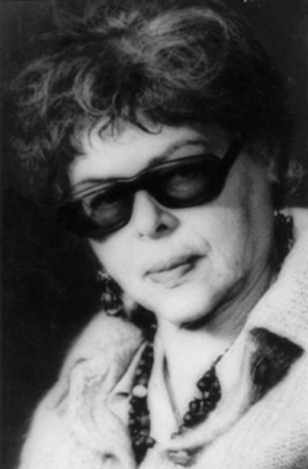
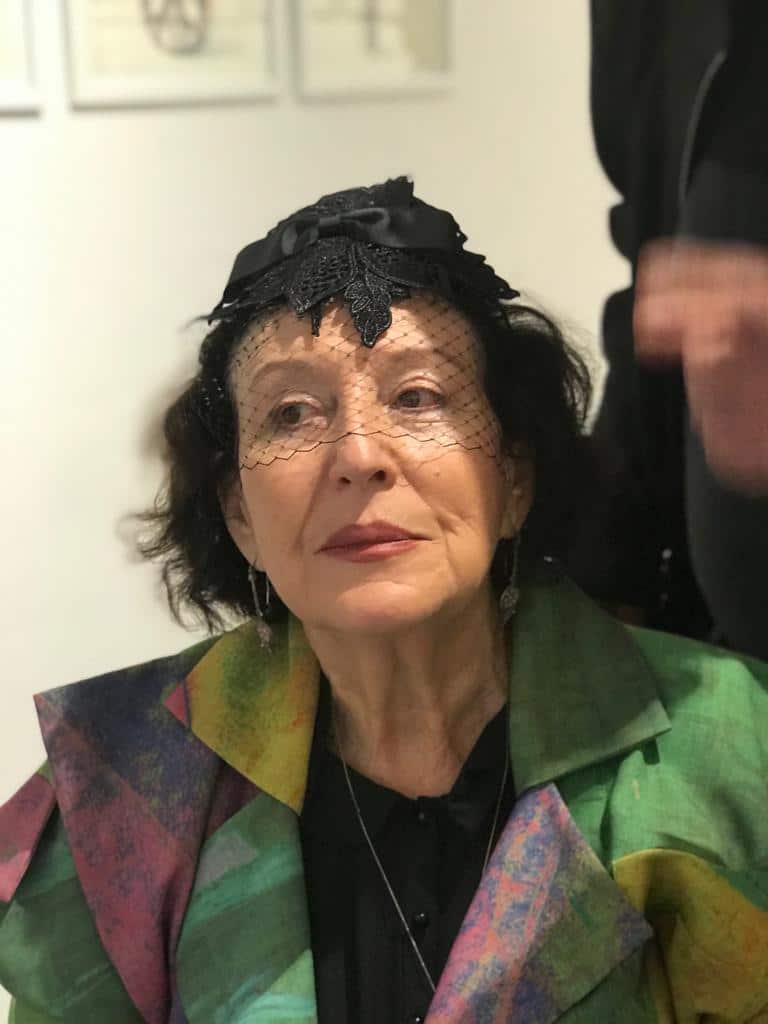
Miriam Gamburd is a prominent sculptor, graphic artist, and writer whose multifaceted career serves as a bridge between the classical European training of her parents and the contemporary Israeli art scene. Born in Chisinau into the distinguished artistic family of Moisei and Eugenia Gamburd, she graduated from the prestigious Stieglitz Academy in St. Petersburg (formerly the Mukhina School). Since immigrating to Israel in 1977, she has established herself as a master of monumental and lyrical forms, creating sculptural reliefs for public buildings across both Moldova and Israel.
Gamburd’s exhibition history is as extensive as it is international, with solo showcases at the Herzliya Museum of Art, the National Art Museum of Moldova, and the Zero Gallery in Barcelona. Her recent projects, such as "False Truth" (2014) and "Homo Vulgaris" (2019), reflect her profound intellectual engagement with the human condition and historical memory. Beyond the studio, she is a respected educator, serving as an associate professor at Beit Berl Academic College and a lecturer at the Bezalel Academy of Art and Design in Jerusalem, while also curating the Israeli delegation at the Salon d'Automne in Paris for several years.


In addition to her visual work, Miriam Gamburd is a celebrated author of prose and memoirs. Her literary output ranges from deep historical research—including monographs on her parents’ legacy—to provocative collections of essays and stories like "Two-Figure Nudity" and "Gargoyle." Her unique intellectual perspective is further showcased in her ambitious project "Erotica in the Talmud and Midrashim," which explores the intersections of sacred texts and sensual imagery, published in both Hebrew and English.
Today, Miriam Gamburd remains a vital force in the cultural dialogue between Eastern Europe and Israel. Her work is a testament to the resilience of the artistic spirit, blending scholarly rigor with a bold, contemporary aesthetic. Through her sculptures, her books, and her tireless efforts to preserve the history of the Bessarabian avant-garde, she continues to inspire new generations of artists and thinkers within the global Jewish diaspora.





















.jpeg)