Manifesto
Not a single word in this project was written with the help of artificial intelligence. It is, in a certain sense, the repayment of my personal debt to Moldova. I have acted as the compiler, as the gatherer of this project, although I am not a writer, as everyone knows. But it was important to me to assemble the letters into the sentences you are reading myself, even though this is not a personal view but the result of research. The only personal element here may be admiration, pride in the fact that my compatriots contributed both to the birth of the Dada movement and to the flourishing of Paris as the cultural capital of Europe, and to much else. I was fortunate, on the eve of the country’s accession to the European Union, to be able to highlight the contribution to world art made by people born in Chișinău, Orhei, and Bălți. The contribution is unexpectedly large in scale. I am grateful to the people who set me on the path to this treasure: Susan Goodman, curator at the Jewish Museum in New York; Lesya Voiskun, an art historian from Tel Aviv; and Alexandr Bilinkis, the head of the Jewish community of Moldova, at whose initiative I began collecting the information.
This project is dedicated to artists born in Moldova in the twentieth century who had a major impact on the development and spread of modern visual culture around the world. It must be said from the outset that we are talking mainly about the generation that came into the world at the turn of the nineteenth and twentieth centuries—precisely those who became the beneficiaries of a powerful tectonic shift in civilization associated with the emergence of the phenomenon of mass society and, accordingly, of a new culture designed for consumption by the broadest layers of society all at once.
This shift gave extraordinary acceleration to all processes, both social and personal, in the first quarter of the last century, which inevitably echoed in the following two decades, marked by reverse tendencies: the freezing of all development, stagnation, and war. Thus, the artists whose youth fell in the 1940s and early 1950s found themselves, so to speak, on the losing side, in an entropic pit.
Nevertheless, the new sociocultural organisms born at the beginning of the century—democratic reorganization of Europe, the rise of the United States to the rank of a leader, the phenomenon of the International, the popularization of science, modernist art and literature, serial production in architecture and everyday life, mass art (first and foremost cinema)—all this exerted a decisive influence on the formation of our present civilization. The visual art of this period deservedly received the definition “avant‑garde,” since it declared the cutting‑edge ideas and key meanings of the new era.
The era of the avant‑garde (and, to a lesser extent, of postwar neomodernism) was accompanied by an unusually large number of slogans, statements, and manifestos, whose ideological range was broader than ever: from production art to pure formalism, from “art must make a person better” to “art owes nothing to anyone at all.” Even the very idea of modernity as such appears in radically different versions if, for example, we compare the Italian Futurists and the French Dadaists. For the former, modernity meant responding to the tasks and demands of society, when art is understood as a motor responsible for forward movement (therefore, the motor must be made more powerful). The Dadaists, on the other hand, clearly saw the abyss that had opened before them and the error of humanism, which had allowed society to produce machines for killing (therefore, this “motor” must be deconstructed).
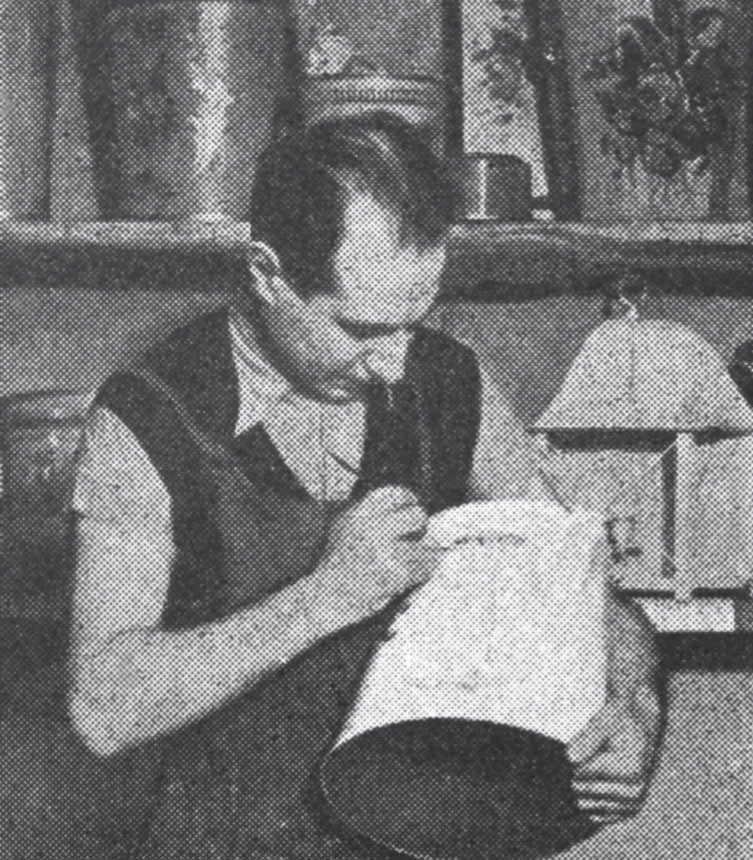
Behind all these ideas and slogans stood real people, with their own origins, talents, characters, and destinies that turned toward them at this or that angle. When one closely studies the life paths of specific artists, questions inevitably arise: how, and to what extent, did the historical context affect not only their creative achievements but their very lives? For example, the now almost forgotten Mikhail Mironovich (Shleme‑Meilikh) Loshakov, who lived in Paris until the age of 38, came in 1940 to visit his relatives in Chișinău, was forcibly granted Soviet citizenship in connection with the annexation to the USSR, and then found himself evacuated to Chelyabinsk, where he remained, teaching children to draw in a modernist key. For his “Cezannism” he lost his job and suffered other forms of persecution. However, had he stayed in Paris, Mikhail Loshakov, with a high degree of probability, might have been arrested and died much earlier in a concentration camp.
When we trace the trajectories of Moldovan artists moving across the world, we inevitably arrive at an analogy with a weaver’s shuttle, establishing connections and weaving the fabric of world culture—a global communication network that emerged in the era of imperialism and became the forerunner of both today’s globalization and contemporary information networks. Moldovan artists, who spread across the globe, became the forerunners of the person of the age of globalization, whom the French critic Nicolas Bourriaud called homo viator (the traveling human)—someone who constantly moves between cultures, countries, and formats. Bourriaud also introduced a new concept for such network structures, borrowing the botanical term “radicant” (a plant that puts out new roots as it grows, such as ivy). Unlike the “radical” (which goes back to a single root or origin), radicant art develops its roots horizontally, adapting to new contexts and constantly changing its identity.
If we take in at a glance the situation with the creative emanation from Moldova, as presented in this project, it seems that the strategies of mobility in contemporary art today are indeed the product of a rethinking of past experience, or, one might say, a reconceptualization of the life circumstances of an entire constellation of authors who decided to radically change their place of residence—sometimes more than once.
Paradoxically, the threads of this network structure of art often turn out to be strictly traditionalist. Tully Filmus, living in the United States, seems never to have left, mentally, the Soroca district of the former Bessarabian Governorate—in his paintings, old men endlessly read the Torah, Hasidim dance, and weddings are celebrated in the shtetl. At the same time, another Moldovan who became a new American, who took the pseudonym Spat, acted as a conduit of Impressionism and, in general, of the fluid energies of the Belle Époque that enlivened the context of the Great Depression. In contrast to these examples, Samson Flexor, who settled in São Paulo, actively promoted a new ideology of non‑objective art in Brazil in the 1960s, turning it into a genuine motor of change on a Latin American scale, while Marcel Janco became an envoy of Dadaism, the most advanced and most vital movement of the twentieth century. At the end of the century in Moldova, the status of ambassador of contemporary art was successively upheld by Iurie Horovschi, Mark Verlan, and Pavel Brăila.
What does this shuttle‑like strategy—casting bridges and linking phenomena, places, and times of action—mean for understanding Moldovan culture itself? It is, of course, evidence of inclusion in the global artistic field, which provides an inner state of “open doors,” an exchange of ideas and mutual influences, without which no creative life is possible. In this project, the biographies of the artists incorporate fragments describing renowned art institutions and artistic phenomena which, on the one hand, are cornerstones in the history of art and, on the other, represent real points of interaction between natives of Bessarabia/Moldova and their foreign colleagues and friends.





















.jpeg)